Pilates is a low-impact exercise method that builds core strength, flexibility and posture through controlled movement and breathing. Designed to support both physical strength and body awareness, Pilates is suitable for people of all ages, fitness levels and experience.
Whether you're completely new to exercise or looking to add something different to your routine, Pilates offers a welcoming way to move better and feel stronger. Here's everything you need to know about its origins, principles, benefits, equipment and what to expect in your first class.
Where Did Pilates Come From?
Pilates was developed in the early 20th century by Joseph Pilates, a German-born physical trainer who believed that controlled movement, strength and breathing were essential to physical wellbeing.
He originally called his method Contrology, reflecting its focus on developing conscious control over the body and its movements.
After moving to New York in 1926, Joseph Pilates introduced his method to a wider audience, including dancers and athletes. Over time, Contrology became known simply as Pilates, evolving into the internationally recognised exercise method practised today.
The Core Principles Of Pilates
Pilates is built around six principles that guide how exercises are performed. Together, they encourage thoughtful movement, improved body awareness and a stronger connection between the mind and body.
- Centring: Engaging the core muscles to create a strong, stable foundation for movement.
- Concentration: Focusing your attention on each exercise to improve awareness and technique.
- Control: Moving deliberately rather than relying on speed or momentum.
- Precision: Performing movements with attention to alignment and proper technique.
- Breath: Coordinating breathing with movement to support control, focus and stability.
- Flow: Connecting exercises through smooth, continuous and purposeful movement.
These principles apply to every Pilates class, whether you're practising on a mat or using specialised equipment.
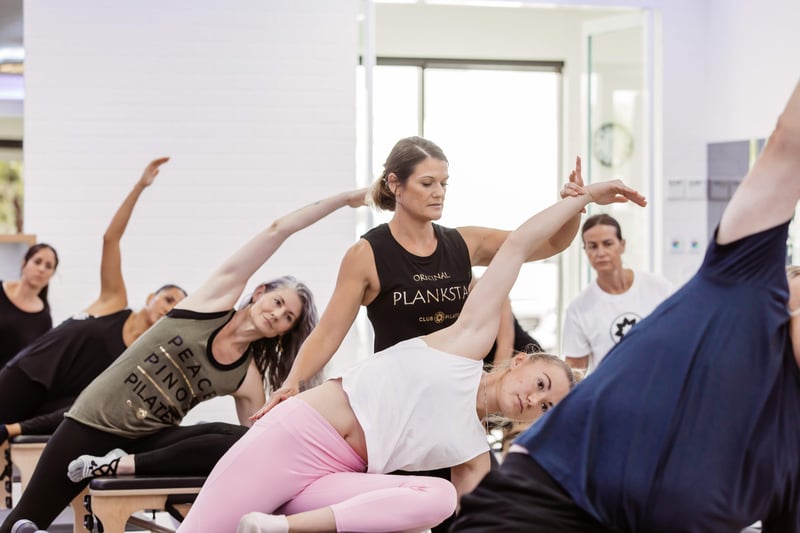
Types Of Pilates
One of the best things about Pilates is the variety of ways you can practise. While the foundational principles stay the same, different class styles and equipment offer unique ways to build strength, improve mobility and challenge your body.
Mat Pilates
Mat Pilates is one of the most accessible forms of Pilates, using bodyweight exercises performed on a mat. It focuses on core strength, flexibility, balance and controlled movement, sometimes incorporating props such as resistance bands, small balls or Pilates rings.
It's a great option for beginners and people who want to practise Pilates without specialised equipment.
Reformer Pilates
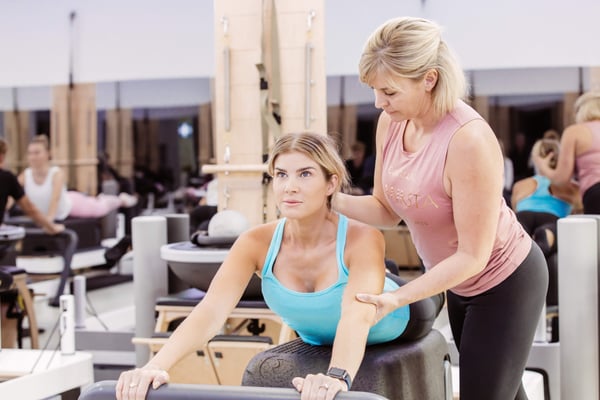
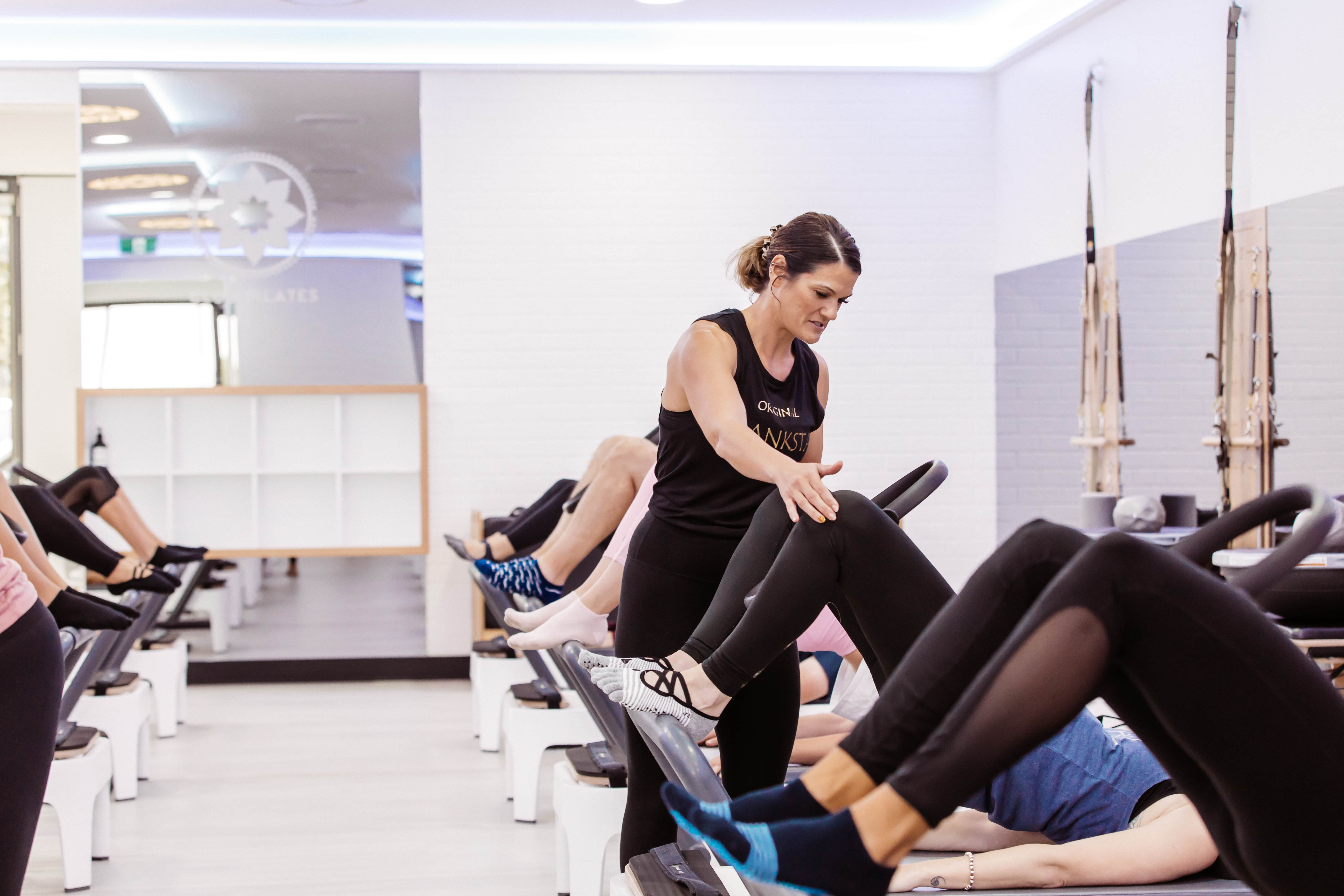
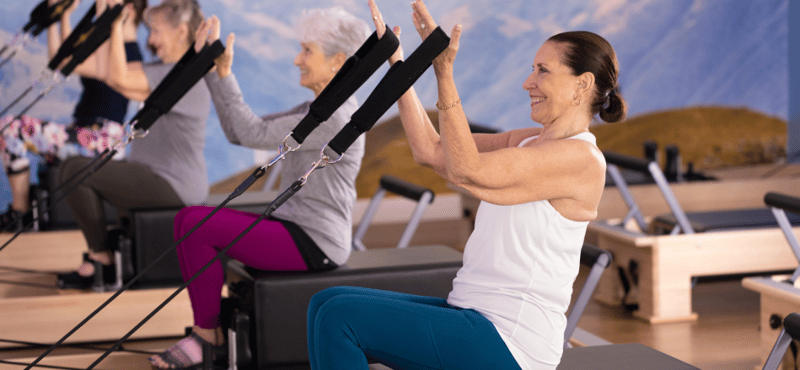
Reformer Pilates uses a specialised machine with a moving carriage, springs, straps and a footbar to provide adjustable resistance and support. Exercises can be modified for different abilities, making it suitable for beginners while offering plenty of challenges for experienced members.
For a closer look at the equipment and exercises, explore our guide to how Reformer Pilates works.
Chair Pilates
Chair Pilates uses a specialised piece of apparatus, often called the Wunda Chair or EXO Chair, which features spring-loaded pedals to create resistance.
Despite its compact size, the chair can provide a challenging full-body workout, helping develop core strength, stability, balance and lower-body control.
Springboard Pilates
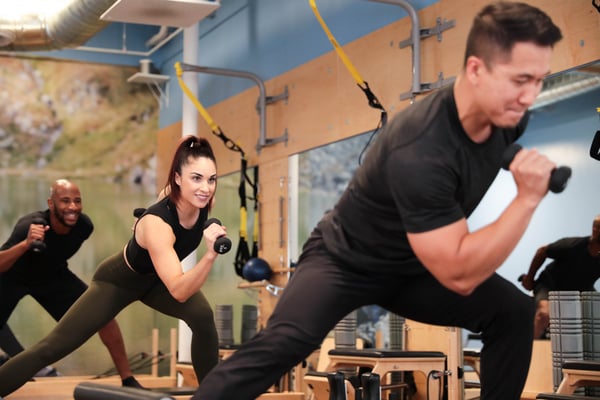
Springboard Pilates uses resistance springs attached to a wall-mounted apparatus, allowing you to perform a variety of upper-body, lower-body and core exercises.
It's particularly useful for developing strength, posture, mobility and coordination through controlled resistance movements.
Curious about the different apparatus? Read our guide to the types of Pilates equipment and discover how each contributes to a varied workout.
Benefits Of Pilates
Pilates offers a range of physical and mental benefits that can support your health, fitness and everyday movement.
Some of the key benefits include:
- Core strength: Strengthens the abdominal, back and pelvic muscles that support stability and movement.
- Improved posture: Develops awareness of spinal alignment and strengthens postural muscles.
- Greater flexibility: Encourages controlled movement through a comfortable range of motion.
- Better balance: Improves coordination, stability and body awareness.
- Low impact on joints: Offers a way to build strength with less repetitive impact than activities such as running and jumping.
Beyond these physical benefits, Pilates can also provide an opportunity to slow down, focus on breathing and enjoy movement without the pressure of high-intensity exercise.
Over time, consistent practice can help you feel more comfortable, capable and confident in your body.
To learn more, explore how Pilates changes your body and discover the long-term benefits of practising Pilates.
Pilates Vs Yoga: What's The Difference?
Pilates and yoga are both low-impact practices that connect movement with breathing and body awareness. However, Pilates generally focuses more on muscular strength, core stability and controlled resistance exercises, while yoga often incorporates sustained poses, flexibility, breathing and meditative elements.
Both can support physical and mental wellbeing, and the right choice depends on your personal goals and preferences.
For a closer comparison, read our guide to the differences between Pilates and yoga.
What Happens In A Pilates Class?
If you've never tried Pilates before, stepping into a studio can feel a little unfamiliar. The good news is that you don't need previous experience, a particular level of fitness or even great flexibility to get started.
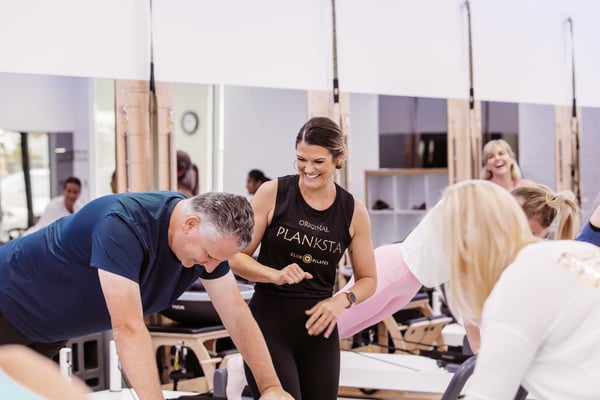
At Club Pilates, our classes are designed for people of all ages, abilities and experience levels, with instructors who help you feel comfortable from the moment you arrive.
A typical full-length class runs for approximately 50 minutes and includes a combination of controlled exercises, breathing, strength work and stretching. Your instructor will guide you through the movements, explain how to use the equipment and provide modifications where needed.
Depending on your chosen class, you might use the Reformer alongside equipment such as the Springboard, Chair, TRX or smaller Pilates props.
Club Pilates also offers four progressive class levels, helping you begin with the fundamentals before exploring more challenging movements as your confidence and experience grow.
New to Pilates? Our free 30-minute Intro Class introduces you to the studio, the equipment and the basics of Reformer Pilates without any pressure to keep up with experienced members.
You can explore our Club Pilates class options or read our Pilates for beginners guide for more information on what to expect.
Discover Pilates At Club Pilates
Now that you know what Pilates is, the best way to understand its benefits is to experience them for yourself.
At Club Pilates, we believe movement should be welcoming, empowering and accessible to every body. Our studios bring together expert instructors, varied equipment and a genuine sense of community, giving you somewhere to build strength, develop confidence and enjoy moving at your own pace.
Whether you're completely new to Pilates or looking for a more varied fitness routine, there's a class and a community ready to welcome you.
Find your nearest Club Pilates studio and book your free Intro Class today.
Frequently Asked Questions
Yes, Pilates is an effective low-impact workout that helps develop strength, flexibility, balance, posture and body awareness. While it may not always raise your heart rate as much as high-intensity cardio, it challenges muscles through controlled movement and resistance. With regular practice, Pilates can contribute to better overall fitness and everyday mobility.
Absolutely. Pilates can be adapted to suit different fitness levels, ages and abilities, making it an excellent choice for beginners. You don't need to be flexible, strong or experienced before starting. At Club Pilates, instructors guide you through the fundamentals and help you progress at a pace that suits your body.
Pilates primarily focuses on controlled movement, core strength, stability and muscular conditioning, while yoga often places greater emphasis on poses, flexibility, breathwork and mindfulness. Both can improve strength, mobility and body awareness, but they use different approaches to achieve these benefits.
Many beginners start with one or two Pilates classes per week to become familiar with the movements and equipment. As your strength, confidence and experience improve, you may choose to increase to two or three sessions per week. The ideal frequency depends on your goals, fitness level, recovery needs and other activities.
No, you don't need specialised equipment to begin Pilates. Mat Pilates can be practised with little more than a comfortable exercise mat, while Reformer and apparatus-based classes use equipment supplied by the studio. For Club Pilates classes, comfortable activewear, grip socks and a water bottle are generally all you need to bring.