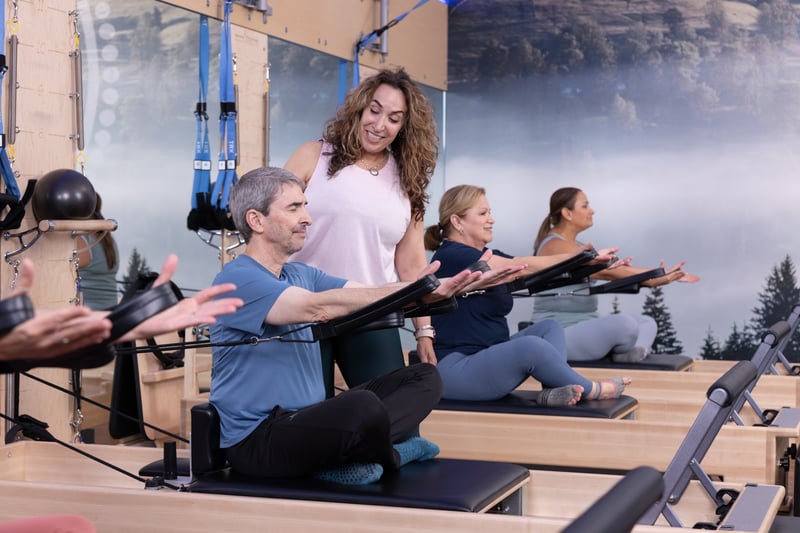

Reformer Pilates for Men
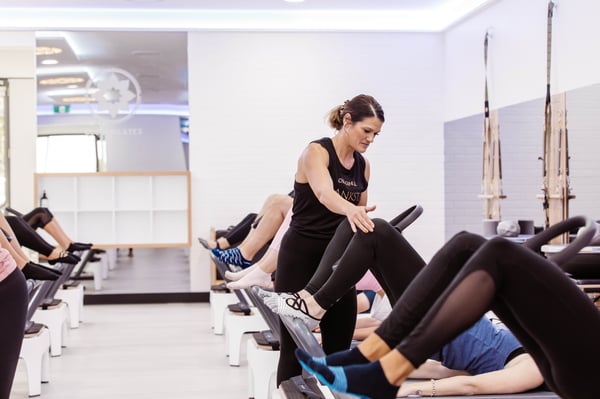
Reformer Pilates for men takes traditional Pilates principles and introduces adjustable spring resistance through a specialised piece of equipment called the Reformer.
The Reformer uses a moving carriage, springs, straps and a footbar to create resistance and support through different exercises. Depending on the movement, spring tension can be adjusted to increase or decrease the challenge as your strength and technique develop.
For men who regularly lift weights or play sport, the Reformer offers a different kind of challenge. Even if you're physically strong, controlling the carriage, maintaining alignment and engaging smaller stabilising muscles can be surprisingly demanding.
The benefits extend beyond resistance training, too. Reformer Pilates can help improve flexibility, balance, muscular endurance and coordination through a wide range of exercises.
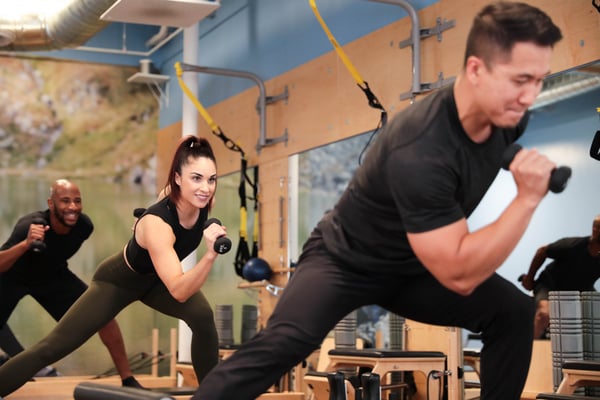
At Club Pilates, you'll also experience equipment beyond the Reformer, including TRX, springboards and Pilates chairs. This gives you more variety and opportunities to progress than a Reformer-only workout.
Curious about the equipment? Read our guide to how Reformer Pilates works.
Pilates Exercises Men Will Love
One of the great things about Pilates is the variety of exercises available. Whether you want to strengthen your core, improve mobility or complement your existing workouts, there's plenty to explore.
Here are five Reformer Pilates exercises worth getting familiar with.
1. Footwork
Performed lying on the Reformer with your feet against the footbar, Footwork involves extending and bending your legs against spring resistance.
Muscles worked: Quadriceps, hamstrings, glutes and calves.
This is a great foundational exercise for developing lower-body strength, improving leg alignment and building control through the hips, knees and ankles.
2. The Hundred
The Hundred is a classic Pilates exercise involving rhythmic arm movements and controlled breathing while maintaining a stable core position.
Muscles worked: Abdominals, deep core stabilisers, hip flexors and shoulder stabilisers.
It's an effective way to challenge core endurance and breathing coordination, even if you're already comfortable with traditional abdominal exercises.
3. Rowing Series
The Reformer Rowing Series uses straps and spring resistance to challenge the upper body through controlled pulling and reaching movements.
Muscles worked: Upper back, shoulders, arms and core.
It's particularly useful for developing upper-body control, supporting shoulder mobility and building strength through the muscles involved in posture.
4. Long Stretch
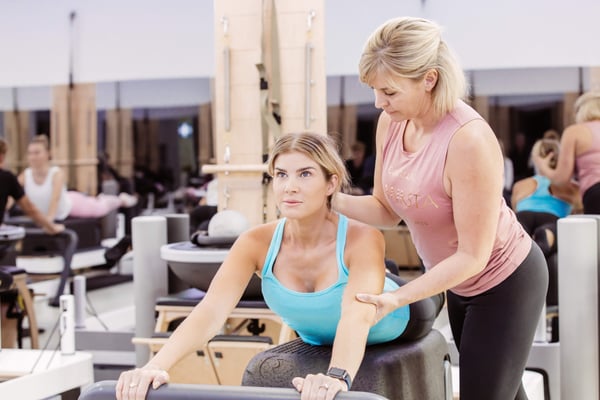
Similar to a plank, the Long Stretch involves holding a strong, aligned position while controlling the movement of the Reformer's carriage.
Muscles worked: Core, shoulders, chest, arms and glutes.
This more advanced movement challenges full-body stability and requires significant control. It's best introduced with instructor guidance once you've developed a solid foundation.
5. Short Box Series
Performed while seated on a box placed on the Reformer, this series involves controlled spinal movements, including rounding, extending and side bending.
Muscles worked: Abdominals, obliques, back extensors and hip stabilisers.
It's an excellent way to challenge trunk control while working on spinal mobility, posture and coordination.
For more ideas, explore our guide to Reformer Pilates exercises from beginner to advanced.
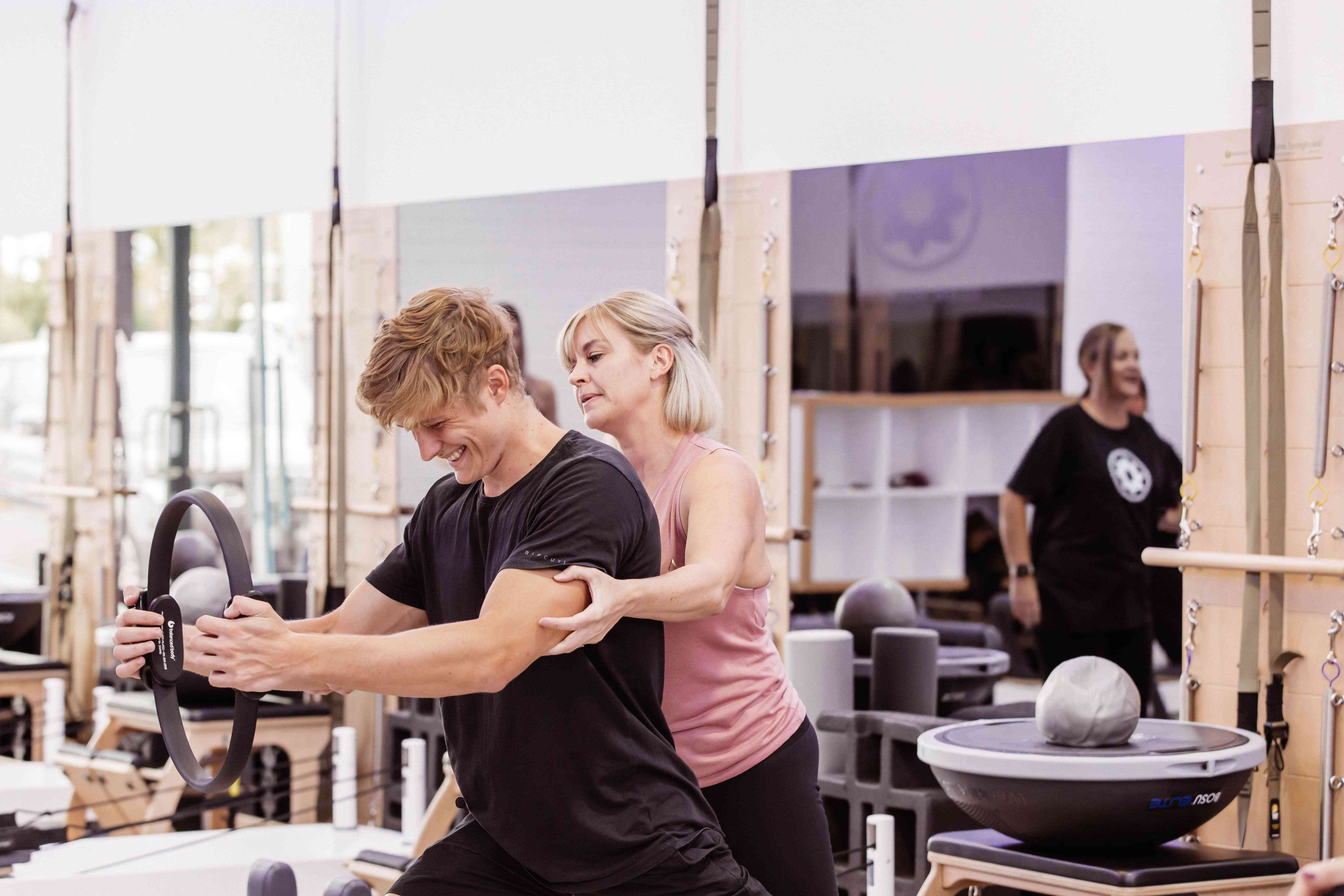
Pilates Alongside The Gym Or Sport
You don't need to give up your current fitness routine to enjoy the benefits of Pilates.
In fact, Pilates can work particularly well alongside weight training, running, cycling and team sports by developing areas of movement that other workouts may not focus on as closely.
If you lift weights, Pilates can complement your training by improving core stability, mobility and control through challenging movements.
If you're a runner, Pilates can help strengthen supporting muscles, improve hip mobility and provide a lower-impact addition to your weekly routine. Learn more about how Pilates compares with running.
And if you play football, basketball, tennis or other sports, Pilates can support balance, coordination and the controlled movement needed during changes of direction.
Starting with one or two Pilates sessions per week alongside your existing training is a practical way to experience the benefits without overloading your schedule.
Give your body time to adjust, particularly if you're introducing unfamiliar exercises. Some muscle soreness is normal when starting something new, and our guide explains what to expect after a Pilates class.
Discover What Pilates Can Do For You
Pilates isn't about fitting a certain image or reaching a particular fitness level. It's about finding a way to move that supports your body, challenges you appropriately and helps you feel stronger in everyday life.
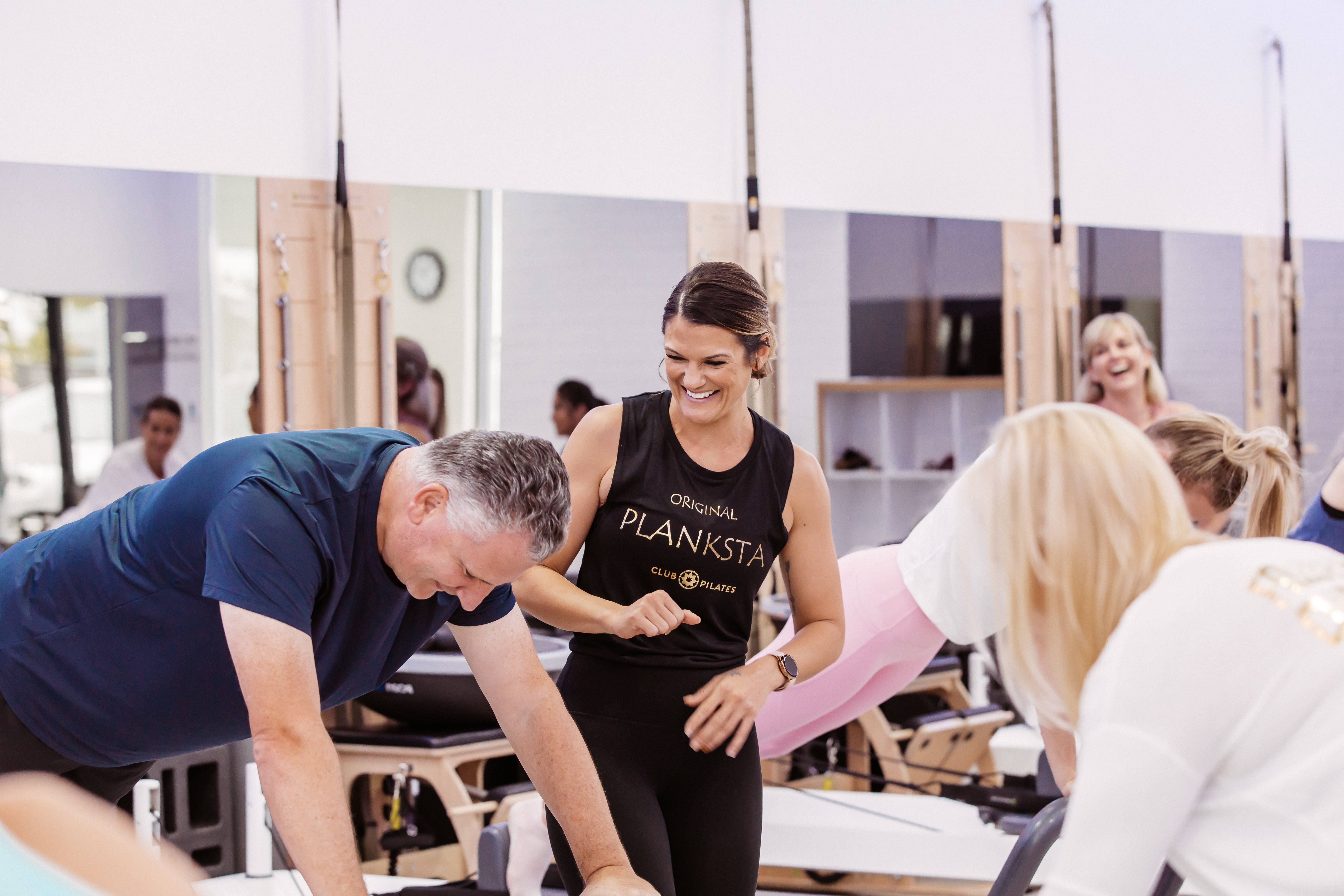
At Club Pilates, our instructors welcome men of all ages, backgrounds and abilities. With four class levels, a variety of equipment and signature formats including Reformer Flow, Cardio Sculpt and Suspend, there's always something new to challenge your strength, mobility and control.
Whether you're stepping onto a Reformer for the first time or looking to complement years of gym training, we'll help you find your place in our community.
Ready to give it a go? Explore our Club Pilates classes, find your nearest studio and book your free Intro Class today.