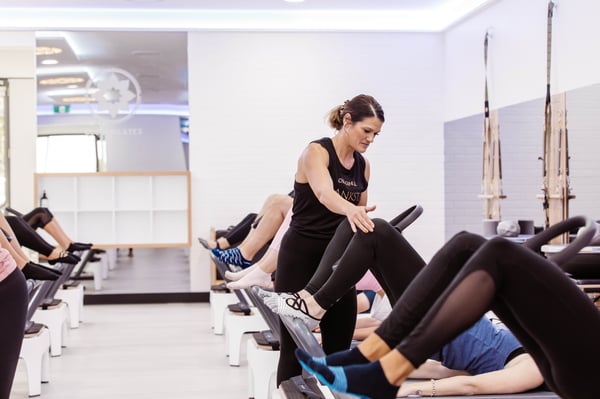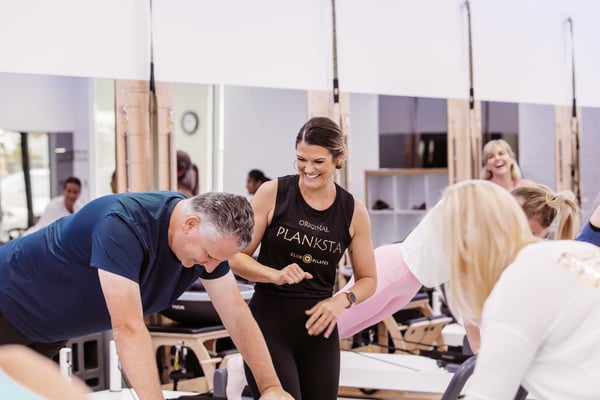

The Pilates reformer is probably the most popular and well-known piece of Pilates equipment within the renowned physical exercise program. While it can look like a medieval torture device to some, this revolutionary device intensified the numerous health and fitness benefits that Pilates offers, taking the exercise regime to a whole new level.
If you’re about to start your Pilates journey, or are trying out the Pilates reformer in your Pilates class for the first time, this guide is for you! Read on to find out about all the fantastic benefits the Pilates reformer can offer your body and your mind!
What is A Pilates Reformer?
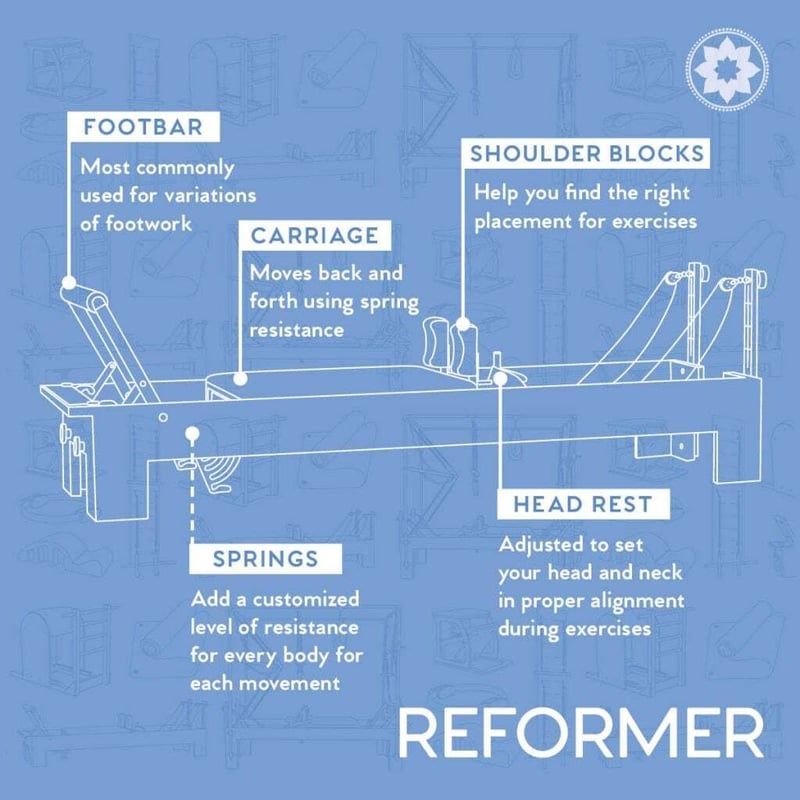
The Pilates reformer was developed by Joseph Pilates and is a type of Pilates exercise apparatus that can arguably provide a more intense workout than mat Pilates exercises. It is a bed-like frame with a flat platform, called the carriage, on top which rolls backward and forward on wheels. There is also a footbar at the end of the reformer which is adjustable and holds springs. At the top of the frame, opposite the footbar, there are also some straps with handles that you can place your feet or hands into, depending on the exercise.
The Pilates reformer is a highly customisable piece of equipment that makes it possible for people of almost any body type to use it to exercise. It’s a great choice for those looking to improve their core stability and achieve good postural alignment. It’s also perfect for toning up, rehabilitating your body after an injury, or getting a thorough, full-body workout.
How is the Reformer Used?
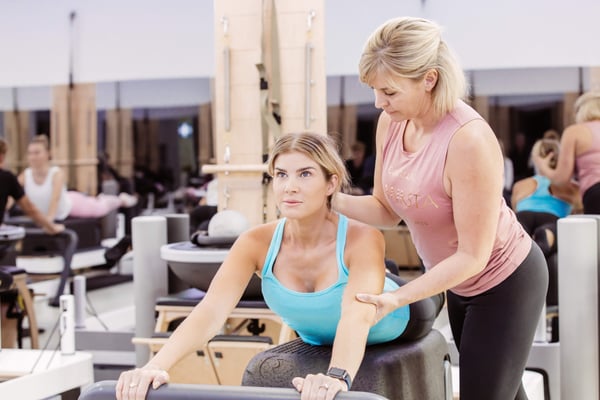
A number of exercises can be done on the Pilates reformer. Each exercise was developed by Joseph Pilates to promote strength, flexibility and balance. For the most part, exercises done on the Pilates reformer use the carriage and require you to push, pull or hold the carriage steady during your workout. There are many, many different types of Pilates reformer exercises available, even for beginners!
While it can be a tricky piece of equipment to master, the Pilates reformer is extremely versatile. When using the Pilates reformer, you can exercise standing up, sitting down, lying down, pulling on the straps, using the footbar, being perched on the footbar, using additional equipment like boxes or rings, and even be upside down!
Benefits of Using the Pilates Reformer
There are numerous benefits to using the Pilates reformer – just look at celebrities like Kate Hudson and David Beckham (yes, he does Pilates and loves it!) who claim it’s the reason they feel so fit and healthy.
The Pilates reformer offers the same base benefits as mat-based Pilates, such as improved overall strength, flexibility, coordination and balance. These important foundations allow Pilates and Pilates reformer users to live better lives overall, providing better posture, easier and more graceful movement, and even relief from chronic or back pain.
Pilates focuses on strengthening your core muscles, which is why those who regularly engage in Pilates or Pilates reformer exercises have toned, firm abs, back muscles, thighs and buttoxes. Pushing and pulling against the resistance of the springs in the Pilates reformer and against one’s own body weight promotes strength building, strong bones, and the long, lean muscles Pilates is famous for.
In addition to that, the instability of the Pilates reformer’s carriage also helps you develop your core strength as you have to control your body’s movement while on the reformer. You can also enhance your ability to achieve and maintain your balance while using the Pilates reformer to exercise.
Other benefits of using a Pilates reformer include:
- Improved posture: All Pilates exercises promotes skeletal alignment and back muscle strength, allowing you to develop proper posture
- Muscle strength: By combining dynamic and static strength training, Pilates actually strengthens all the muscles in your body
- More stamina: As a resistance workout, Pilates constantly engages your muscles, allowing you to develop more stamina

- Improved balance: Increasing your body’s strength and developing proper posture will lead to greater balance and coordination
- Enhanced core stability: The centering principle of Pilates states that strength should be build from your core; Pilates builds your core muscles
- Greater flexibility: Pilates lengthens and stretches muscles, increasing your range of motion and providing you with greater flexibility
- Mental functioning: Engaging your body and your mind, breathing and concentration boosts your mood and reduces stress
- Greater blood flow: Improved posture, greater flexibility, stress reduction and breathing techniques can lead to improved blood flow.
Perhaps the greatest benefit the Pilates reformer can offer is that anyone, of any age or fitness level, can simply hop aboard and start learning how to use the apparatus to begin their journey to better physical and mental health!
Reformer Vs Mat Pilates
The main difference between Reformer and mat Pilates is how resistance and support are provided.
Mat Pilates primarily uses your body weight and gravity to challenge your muscles, while Reformer Pilates uses adjustable springs, straps and a moving carriage to create resistance or assistance. Both develop strength, flexibility and control, but the Reformer provides additional exercise options and ways to adjust the difficulty.
For a more detailed comparison, read our guide to Pilates Mat vs Reformer: What's the Difference?.
Is Reformer Pilates Good For Beginners?
Absolutely! Reformer Pilates is suitable for beginners because exercises can be adjusted to match different fitness levels, abilities and experience.
Spring resistance can be modified to provide lighter resistance or additional support, depending on the movement. Your instructor will guide you through the equipment setup, demonstrate correct techniques and help you feel comfortable throughout the class.
At Club Pilates, beginner-friendly classes focus on building a strong foundation in movement, breathing and alignment before progressing to more challenging exercises.
If you're new to the practice, our complete beginner's guide to Reformer Pilates is a great place to start.
What To Expect In Your First Reformer Class
Your first Reformer Pilates class is all about getting familiar with the equipment, learning the basics and discovering how the movements feel in your body.
Arrive a little early so you have time to meet your instructor, discuss any injuries or movement concerns and get comfortable in the studio. Your instructor will show you how to use the Reformer, including adjusting the springs, positioning the footbar and using the straps safely.
Wear comfortable activewear that allows you to move freely, along with grip socks for stability and hygiene.
At Club Pilates, you can begin with a free 30-minute Intro Class designed to introduce you to the equipment, studio environment and foundational Pilates movements before exploring our wider range of Pilates classes.
Ready to Try Reformer Pilates?
Reformer Pilates is a well-developed exercise system that can help people of all ages become stronger and healthier. It is designed to work almost all of your body, leading to greater overall strength, posture, alignment and balance.
The reformer only intensifies these benefits, giving you all the more reason to sign up and get started!
Frequently Asked Questions
Not necessarily. Reformer Pilates can be more challenging in some exercises because the springs create additional resistance and the moving carriage requires control and stability. However, the equipment can also provide support, making certain movements more accessible. Both mat and Reformer Pilates can be adapted to suit beginners and experienced participants.
Many beginners start with one or two Reformer Pilates classes per week to build familiarity, strength and confidence. As your body adapts, you may choose to increase to two or three sessions per week, depending on your goals and recovery needs. Consistency is more important than intensity, so choose a routine that feels sustainable.
Reformer Pilates can support weight loss by building muscular strength, improving fitness and helping you maintain a consistent exercise routine. While it generally burns fewer calories than higher-intensity cardio, more dynamic Reformer classes may increase energy expenditure. For weight-loss goals, Pilates works best alongside balanced nutrition, regular daily movement and other forms of exercise.