Is Pilates good for weight loss? Yes, Pilates can support weight loss, although it usually burns fewer calories per session than higher-intensity cardio, so it works best as part of a broader routine that includes regular movement, strength work and balanced nutrition.
Pilates is not a quick-fix approach to weight loss. Its strength is that it is low impact, adaptable and easy to keep coming back to. For many people, that consistency is what makes Pilates a useful part of a long-term health and fitness routine.
How Pilates Supports Weight Loss
Pilates can support weight loss by helping you build lean muscle, improve body awareness and stay consistent with movement. While it may not burn as many calories as running, cycling or high-intensity training, it can help strengthen the muscles that support posture, balance and everyday movement.
Building lean muscle may also support your resting metabolic rate, as muscle tissue uses more energy than fat tissue. Pilates also places less stress on the joints than many high-impact workouts, which can make it easier to stay active over time, especially for beginners, people returning to exercise or anyone managing discomfort.
Beyond weight loss, Pilates can help you feel stronger, more mobile and more confident in your body. You can read more about the wider benefits in our guide to why Pilates is a great exercise for anyone.
What The Research Shows
Research on Pilates and weight loss is still developing, but there is evidence that regular Pilates can support changes in body composition.
Clinical studies involving overweight and obese women have found reductions in body weight, BMI and waist measurements after 8 to 12 weeks of regular Pilates. These results do not mean Pilates guarantees weight loss for everyone, but they do suggest it can be a helpful form of exercise when practised consistently.
It is also important to remember that weight is only one measure of progress. Pilates may change how your body feels and functions before the number on the scale changes. Improved posture, stronger muscles, better mobility and more control are all meaningful signs that your body is adapting. Learn more about how Pilates can change your body.
Mat Vs. Reformer Pilates For Weight Loss
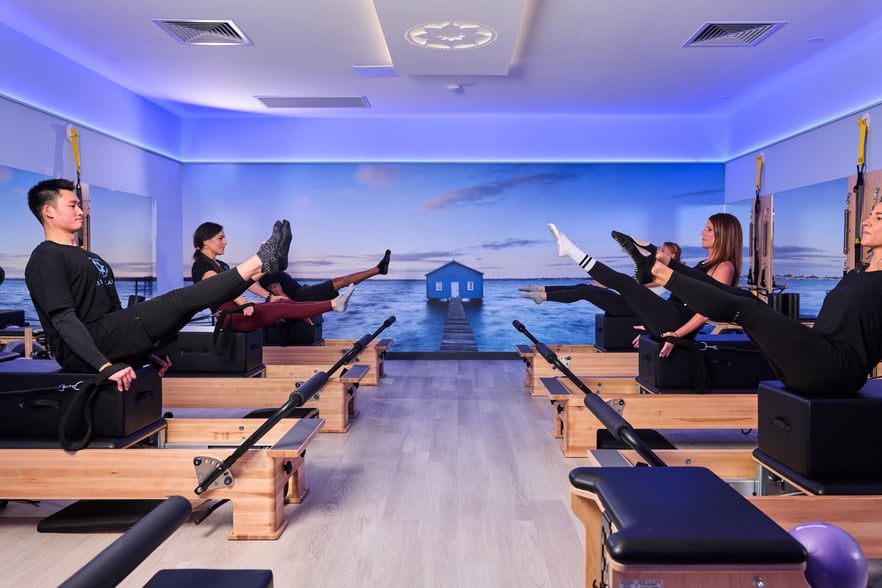
Both mat and Reformer Pilates can support strength, control and mobility. Mat Pilates uses your body weight for resistance, making it simple and accessible. Reformer Pilates uses spring-based resistance, which can add more challenge, variety and support depending on the exercise.
For weight loss goals, Reformer Pilates may increase intensity compared with some mat sessions because the equipment allows for more resistance, more movement variety and stronger full-body engagement. It can also make exercises more adaptable, which helps people train consistently at the right level.
That does not mean mat Pilates is not useful. It can still support strength, flexibility and body awareness. If you are weighing up the options, read more about the pros and cons of Pilates mat workouts.
How To Get The Best Weight-Loss Results From Pilates
For best results, think of Pilates as one part of your overall routine rather than the entire plan. Many people benefit from practising Pilates 2 to 4 times per week, depending on their goals, fitness level and recovery needs.
To support weight loss, combine Pilates with regular cardio such as walking, swimming, cycling or running. You may also include strength training if your body is ready for it. Pilates can complement these forms of exercise by improving core strength, control, posture and movement quality.
Nutrition matters too. Weight loss is strongly influenced by what and how much you eat, so your results will be better when Pilates is paired with balanced meals, enough protein, hydration and sustainable habits. For practical guidance, read our article on what to eat before and after a Pilates workout.
Most importantly, choose a routine you can maintain. The best workout for weight loss is the one you can keep doing consistently.
Start Building A Routine That Works
Pilates can be a strong part of a weight-loss routine because it helps you build strength, move with more confidence and stay consistent without putting excessive stress on your body.
Start where you are, choose classes that suit your level and focus on building habits you can maintain beyond the first few weeks.