Pilates exercises for beginners are a great way to start building strength, improving mobility and feeling more confident in the way your body moves. They are suitable for all fitness levels and can be adapted to your needs, so no matter where you are starting from, you can get something out of them.
Fully equipped Pilates studios like Club Pilates also offer different class styles throughout the day, making it easier to begin with support and progress when you feel ready. If you are new to exercise or unsure whether Pilates is right for you, start with these simple movements before moving on to more challenging exercises.
For a broader introduction to the practice, read our complete guide to Reformer Pilates for beginners.
Try These Pilates Exercises
1) The Hundred
Lie on your back with feet flat on the ground and shoulder-width apart, legs bent to 90 degrees. Bring your arms parallel to your body with palms facing down, then press down into the mat with your hands and hips simultaneously as you exhale. Keep your head, neck, and shoulders off the mat.
Inhale and hold for five counts before exhaling and repeating nine more times for a total of 10 repetitions.
Muscles worked: Core, abdominals, hip flexors, shoulders and stabilising muscles.
2) The Scissor
Lie down with both legs in the air and hip-width apart. Bring one of your legs down while resting the other hand on it. Now, without bending or moving your head or neck, kick up with the other leg until both are extended in front of you. Repeat with the opposite side.
Repeat this 10 times with each leg.
Muscles worked: Abdominals, hip flexors, hamstrings and deep core stabilisers.
3) The Bridge/Double leg stretch
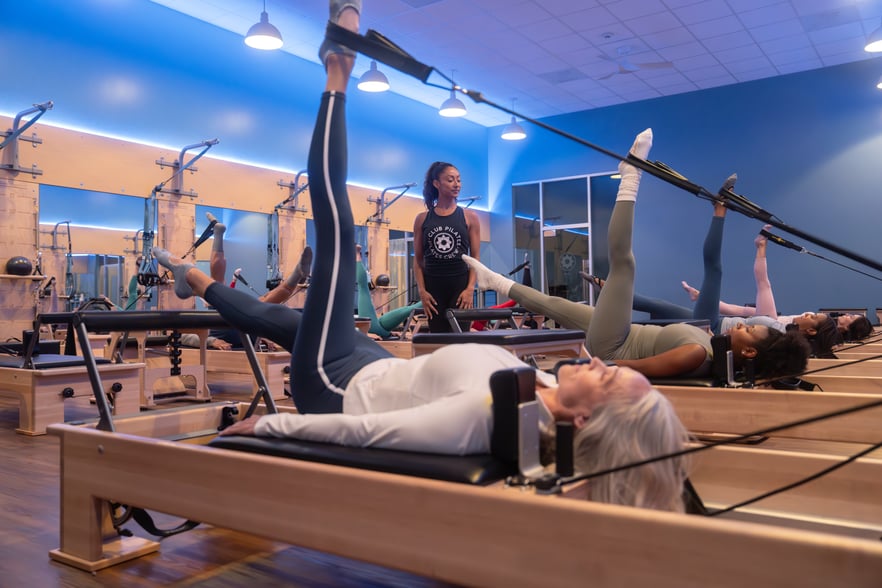
Lie face-up on the mat with your knees bent and your feet hip-width apart. Your arms should either be by your side or crossed over your chest (chest open). Make sure that the natural curve of your spine is followed by tucking in your buttocks slightly.
Keeping your legs together, lift your hips off the floor until your upper body is supported by straight arms and shoulders, and thighs and calves are parallel to the floor. Hold for 5 breaths then release, tucking your chin to chest as you lower down.
Repeat this 3 times.
Muscles worked: Glutes, hamstrings, lower back, abdominals and pelvic stabilisers.
4. Single Leg Stretch
Lie on your back with your knees bent into a tabletop position. Lift your head, neck and shoulders gently off the mat, then bring one knee towards your chest while extending the other leg away from you. Place your hands lightly on the bent leg, keeping your elbows wide and your shoulders relaxed.
Switch legs slowly and with control, breathing steadily as you move. Aim for 8 to 10 repetitions on each side.
Muscles worked: Abdominals, hip flexors, obliques and deep core muscles.
5. Dead Bug
Lie on your back with your knees bent at 90 degrees and your arms reaching towards the ceiling. Keep your spine neutral and your core gently engaged. Slowly lower one arm behind you while extending the opposite leg away from your body.
Return to the starting position, then repeat on the other side. Move slowly and focus on keeping your hips stable. Aim for 6 to 10 repetitions on each side.
Muscles worked: Deep core, abdominals, hip stabilisers, shoulders and coordination muscles.
If you enjoy starting the day with movement, you may also like these 5 Pilates exercises to kickstart your day.
What are the Benefits of Doing Pilates Regularly?
When done regularly, Pilates can help you to achieve a strong, toned body as well as improve your overall health and well-being. If you are new to exercise or want to start working out regularly, Pilates is a great way to start as it is low-impact and can be adapted to your own abilities.
When practicing Pilates regularly, you can soon enjoy the following benefits:
- increased flexibility
- increased muscle strength
- improved posture
- reduced stress levels
- improved breathing efficiency.
Start with these three exercises and remember that they can be changed to suit your needs. When you feel confident enough, move on to more challenging Pilates exercises for an even better workout!
You may feel some muscle soreness after trying new Pilates exercises, especially if you are working muscles that are not used often. This is usually normal, but sharp pain is not. Learn more about whether you should be sore after Pilates.
Mat Pilates Or Reformer Pilates For Beginners?
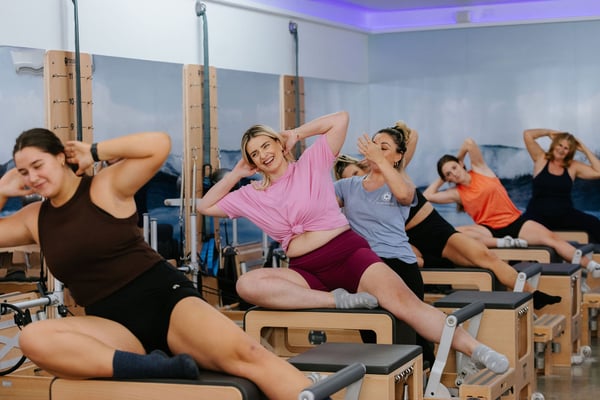
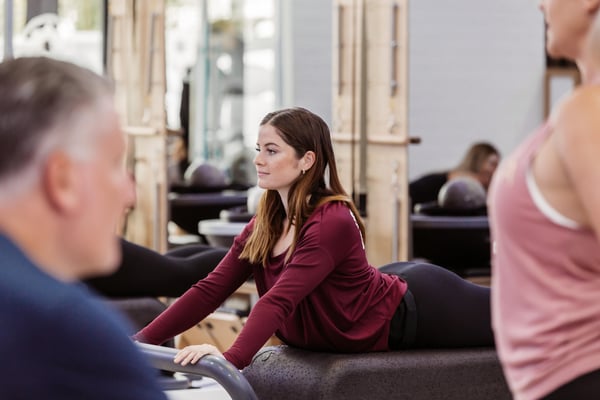
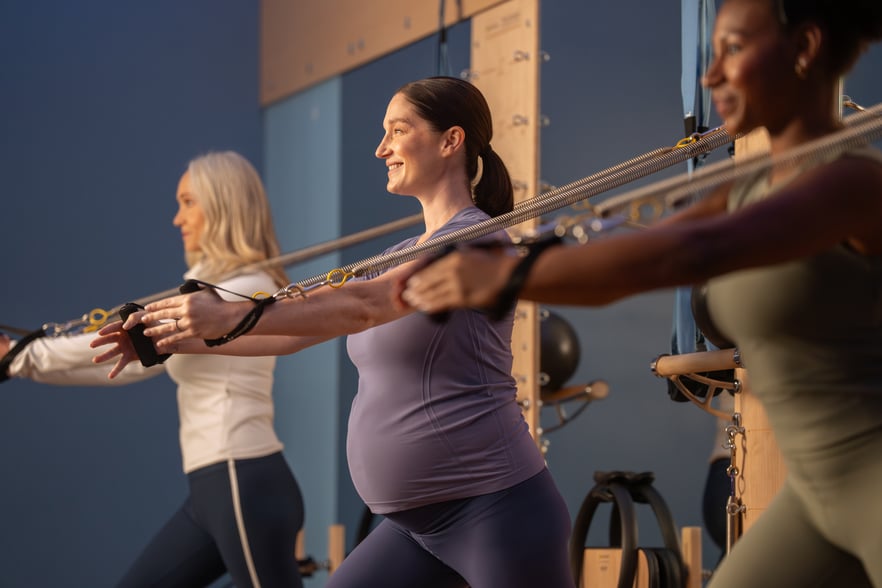
These exercises can be practised on a mat, which makes them easy to try at home. However, many beginners also enjoy learning Pilates in a studio environment where an instructor can guide their technique, offer modifications and help them feel more confident.
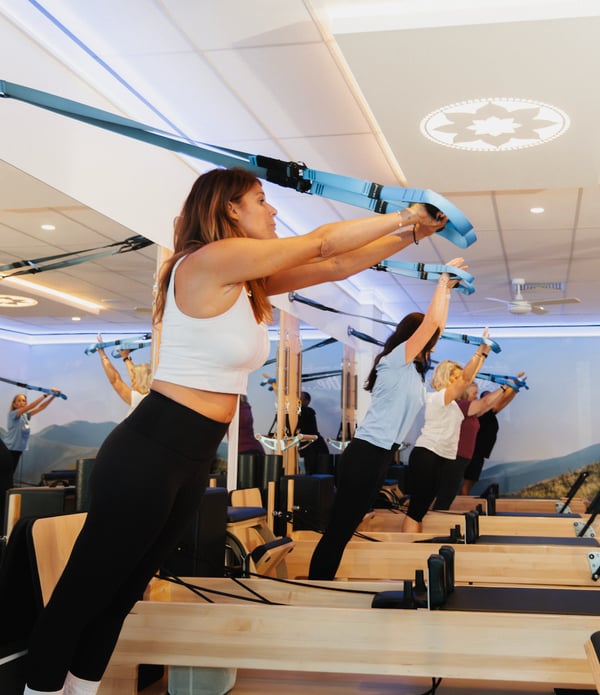
Reformer Pilates uses specialised equipment to add support, resistance and variety. If you are curious about how studio equipment works, read our beginner guide to Pilates equipment.
Start With Support
Pilates is not about doing everything perfectly from day one. It is about learning how your body moves, building strength gradually and feeling more confident with each session.
Start with these exercises, move at your own pace and explore a Club Pilates class when you are ready for more guidance, variety and progression.